Notes
- Compute means to calculate. Define compute. Show the evolution of the word over the years.
- Define computational thinking. Show the evolution of the term.
- What do we compute?
- Basic arithmetic for day-to-day monetary transactions.
- Historically, we calculated the positions of planets.
- Engineers solve equations to build things. Game devs:
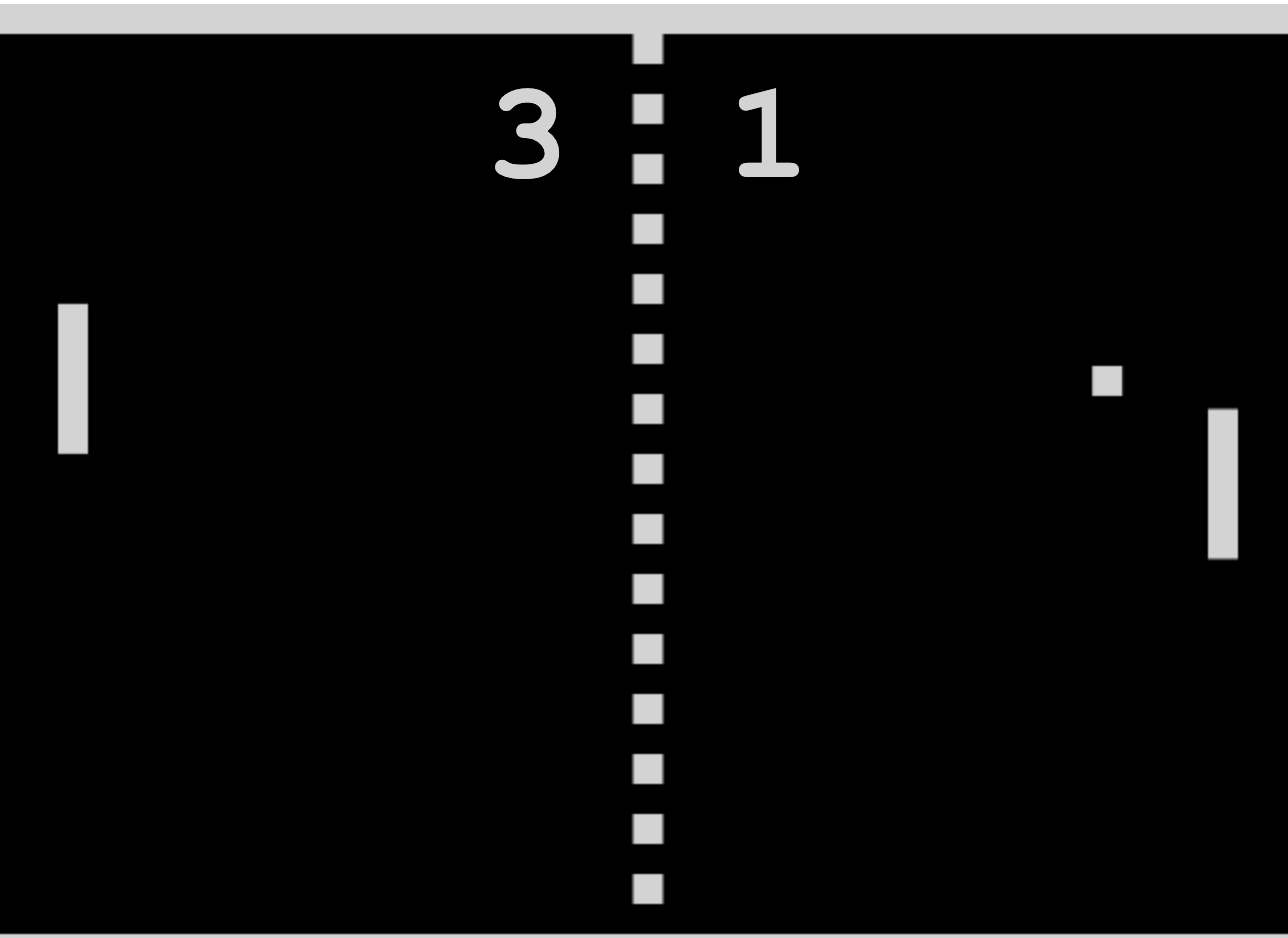
- Pong needs to compute velocity, angle, rebound speed of the ball.
- Update the score.
- Determine the number of key presses and the amount to move the paddle.
- Why do we compute?
- We need to build things.
- Metro rail
- Hospital and the surgeon’s knife
- Income tax portal
- To build things, we have to solve problem.
- We live in a mathematical world. The world is governed by numbers.
- How do we compute?
- Fingers
- Pen and paper
- Calculator
- Desktop computer/laptop
- Smartphone
- Who does the computation?
- Machine
- Technology has effected a transfer of agency.
- Human computations are
- slow
- error prone when volumes are high
- not scalable
- Human computer, this was actually a job until the advent of digital computers. The first computers were human, mostly women. Two instances:
- The two wars and the space race employed human computers.
- Manhattan project at Los Alomos employed human computers.
- NASA during the 1960s, the space race.
- Computing: Computing stands on three pillars
- Data
- Description of an entity or an event
- A cricket match generates data
- Exam generates data
- A physics experiment generates data
- A human being generates data
- A book generates data
- A school reunion generates data
- A video generates data
- Data about data, or metadata
- Length of the video
- Category
- Frame rate
- All things in the world at all times are emitting some information which we capture as data
- Representing data is in itself a big problem
- Data from a cricket match can be represented as a table
- In a reunion, you can represent the relationship between different people as a graph
- Collection, curation, storage and retrieval of data
- Google search is nothing but retrieval of data
- Compute
- The ability to execute instructions rapidly
- Processing power
- Algorithms
- How do you multiply two three-digit numbers?
- How do you multiply two ten-digit numbers?
- The sequence of steps is agnostic to the operator.
- An algorithm is a sequence of unambiguos steps.
- A recipe is not an algorithm for this reason.
- Problem solving
- The loop
- Problem formulation
- Solution arrived using problem solving principles
- The solution spawning new problems or refining existing problems
- Problem formulation
- Goal
- Resources
- Constraints
- Problem solving principles
- Decomposition
- Abstraction
- Composition
- Algorithmic thinking
- Algorithms
- Define an algorithm as a “finite sequence of well-defined steps”
- Add demos to showcase different algorithms
- Three-digit multiplication
- Bobo, the path finder
- Bobo, the builder
- Linear search vs binary search